



Water Valorisation
Drinking water is the most precious resource in the world, but it is not inexhaustible and it is urgent
to preserve it. This vital resource represents a major challenge, especially in the face of climate change.
In urban areas, efficient water management can help mitigate heat islands by promoting solutions such as
infiltration and greening.
Ensuring the availability of drinking water is becoming increasingly difficult. With more frequent droughts
and a warmer climate, irrigation needs increase.
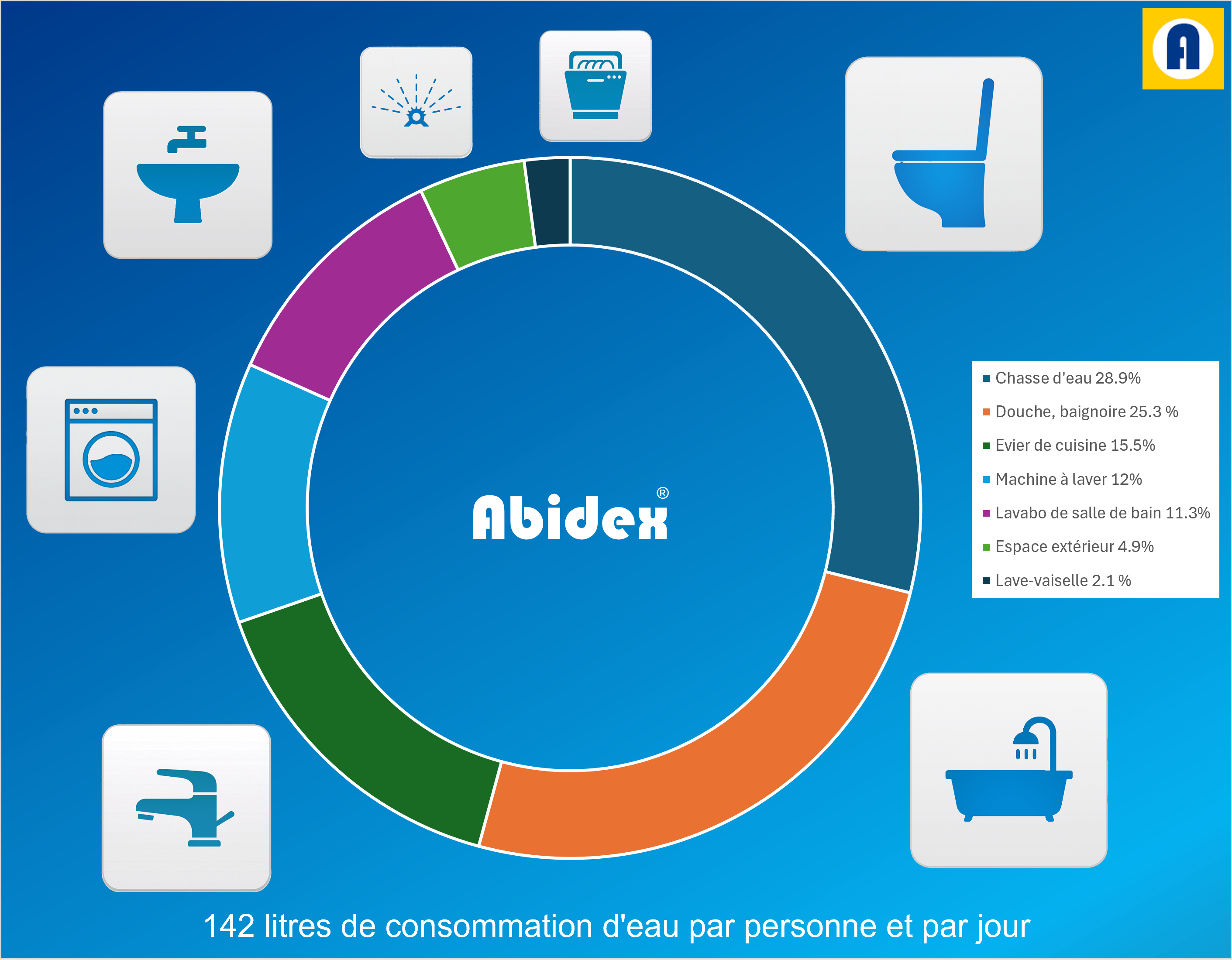
An average user consumes 142 litres of water per day. Only about half is for drinking and hygiene. The other
half is used for irrigation, toilets and washing machines. These uses do not require drinking water.
Two solutions are both relevant and effective: greywater recycling and rainwater harvesting. They can be used
separately or combined. These solutions are available for domestic, collective, agricultural and industrial
applications.
The choice depends on project requirements, building type, water demand and especially irrigation needs.
A potential water saving of ~45.8% for an average household, and much more
if irrigation demand exceeds 4.9% of consumption.
Greywater Recycling
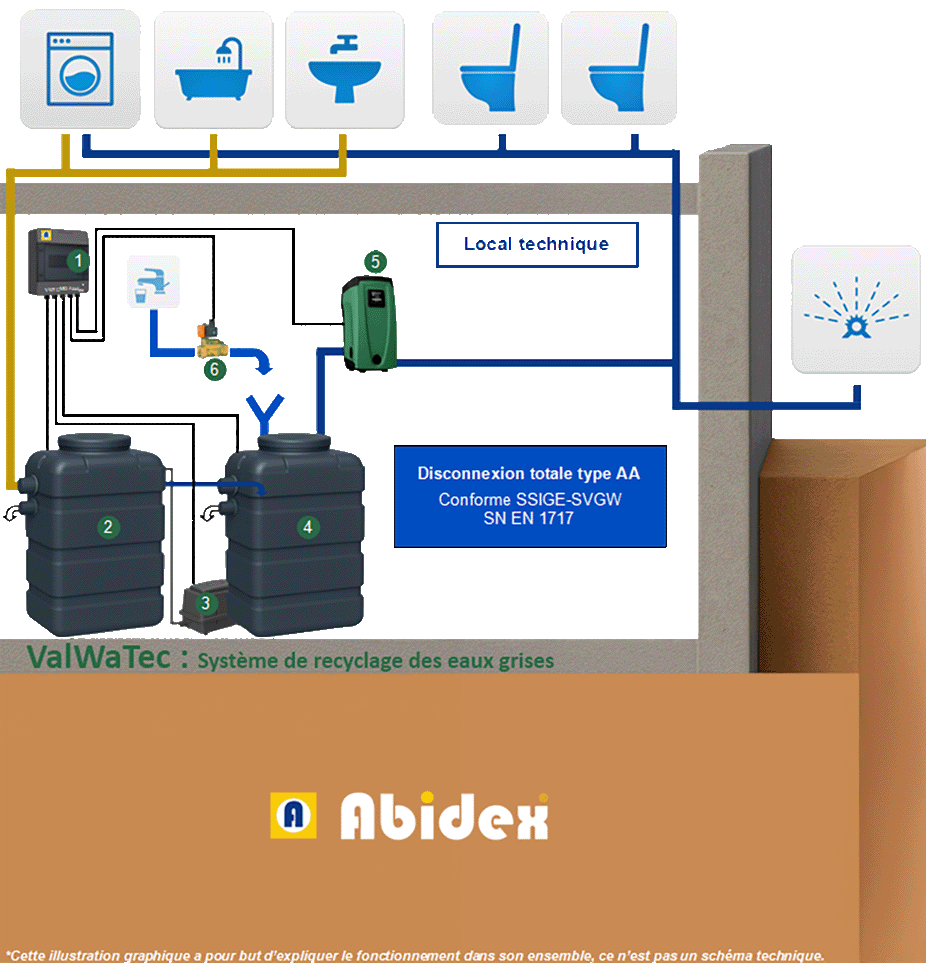
Greywater is lightly polluted wastewater such as water from bathtubs/showers, washbasins
(excluding kitchen and toilets) and washing machines.
About ~69 litres per person per day can be recycled. For a household of 4 people, this represents around
100,740 litres per year.
Once treated, this water can be used for irrigation, toilets, washing machines and various
technical/industrial water uses.
The quantity of greywater depends exclusively on your drinking water consumption, meaning you have a stable
water source all year round.
By installing a heat exchanger or a heat pump upstream of our greywater recycling system, you can recover
heat and preheat cold water before it enters the water heater, generating savings of up to ~4.35 CHF/m³.
Our ValWaTech system has matured into an integrated, safe, compact solution with minimal maintenance.
Drinking water deserves to be used twice!
Water security and autonomy
Droughts, restrictions, bans, fluctuating water prices: your building becomes resilient and you secure a stable,
reliable water source all year round.
Higher building value & profitable investment
In addition to water bill savings of up to 50%, you improve the building’s energy and environmental performance,
increasing its resale value. Water recycling contributes to LEED and BREEAM certification.
Ready for tomorrow
Switzerland and the EU encourage decentralised water management systems (Climate adaptation plans, (EU) 2020/741,
UWM Roadmap 2024, Eawag publications). Installing today means anticipating tomorrow’s standards.
Concrete and measurable environmental impact
Recycling domestic water means acting here and now. Unlike electricity, water can be stored easily, and every m³ saved
has a direct impact on groundwater and local rivers.
Support to public infrastructure
Wastewater treatment plants are under pressure. Less wastewater to treat = lower load on treatment plants and public networks.
Rainwater Harvesting
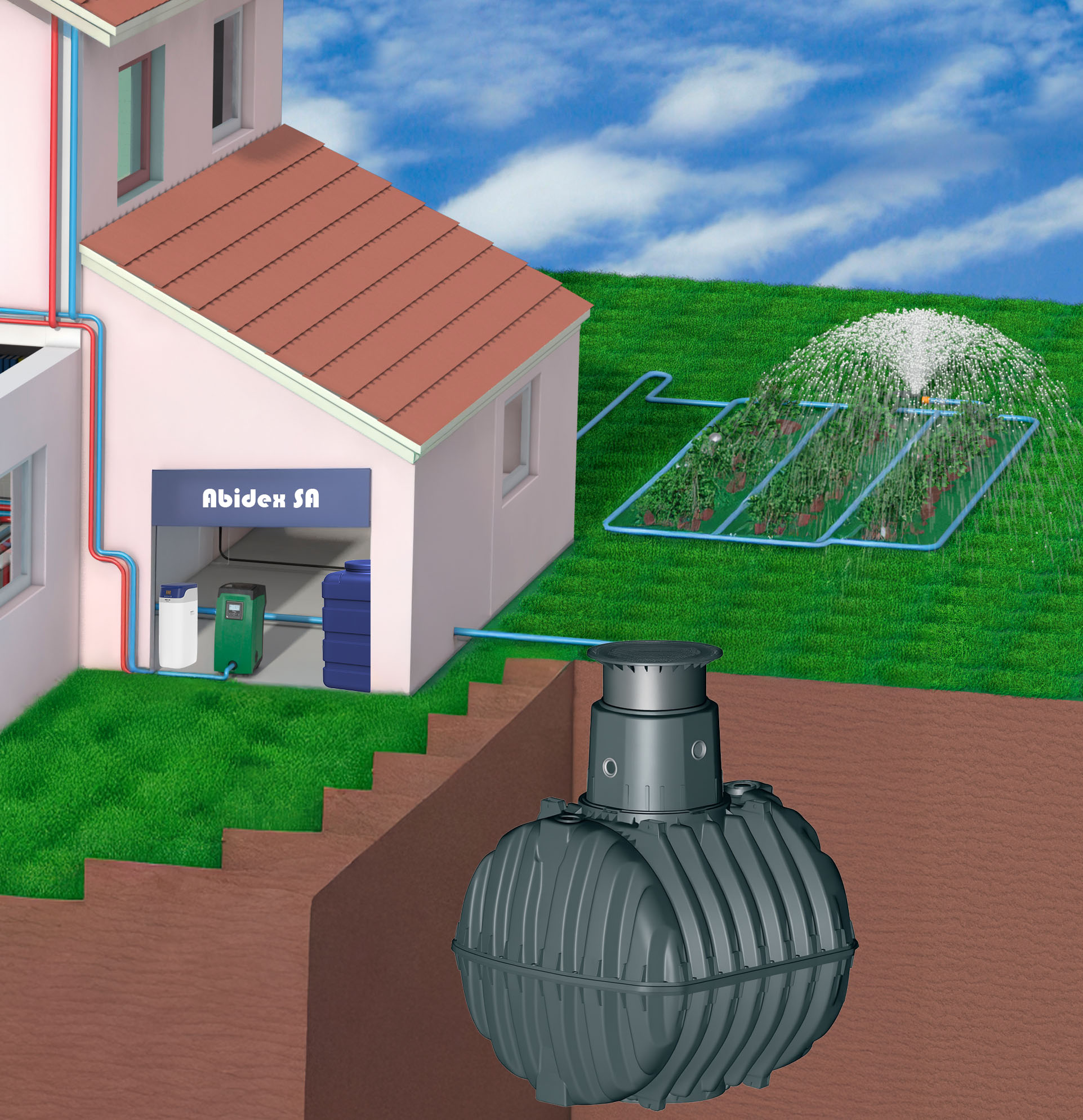
Rainwater is
- Free of particles and grease traces
- Soft, without limescale
- With a neutral pH of 6.2–8
- Higher quality than water measured in recreational lakes
- Colourless, clear, odourless
At ambient temperature, it is better suited for watering plants and gardens than tap water.
It can of course also be used for toilets, washing machines and various technical/industrial water uses.
It can easily become potable with UV-C treatment.

Calculation sheet
Retention Plus (retention and reuse)
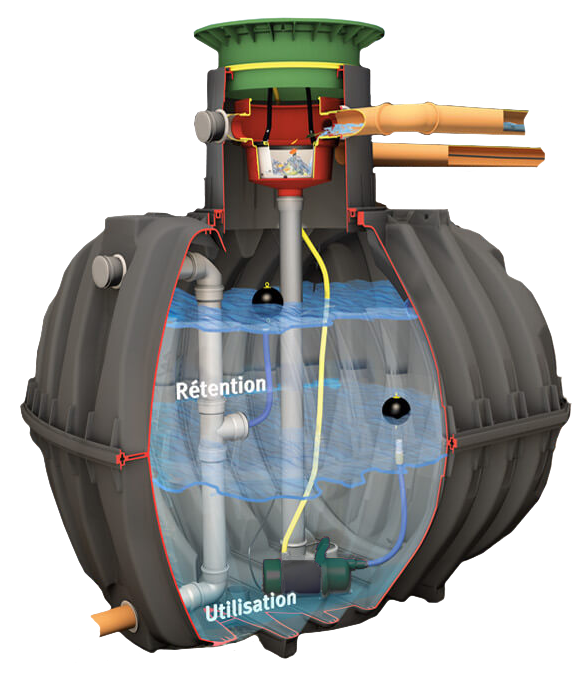
The exponential increase in impervious runoff surfaces (homes, car parks, roads, etc.) leads to saturation of drainage networks
and increases flood risks.
As a result, public authorities increasingly require retention solutions. We not only provide retention solutions, but also
a “plus” version that allows you to reuse part of this water, enabling you to benefit from the installation by reducing
drinking water consumption while securing an additional water source.

You may also be interested in